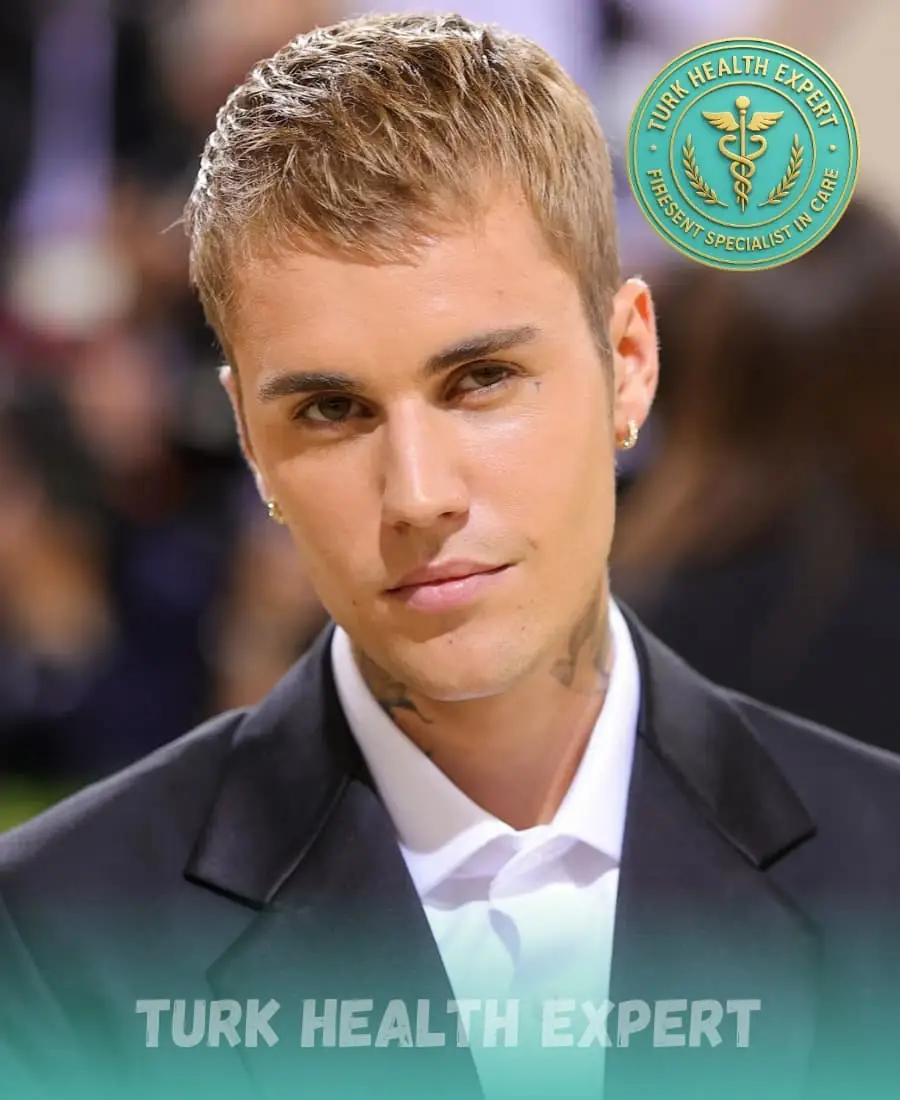
Justin Bieber
Hair Transplant —
Did He? The Evidence.
Justin Bieber's hairline has been one of the most searched topics in hair restoration circles since his 2024 appearances showed a strikingly thicker, more defined result than photographs from his early twenties. He has never confirmed or denied a procedure. We have analysed the publicly available photographic evidence with a clinical eye — here is what it shows.
The Hairline Through the Years — What Changed
Justin Bieber rose to fame in 2009 as a teenager with one of the most recognisable hairstyles in pop music — the long, floppy fringe that became a cultural moment of its own. His hairline in those early years was notably high and rounded, typical of a naturally maturing male hairline in late adolescence.
By his early-to-mid twenties, photographs showed the kind of hairline recession that affects a large proportion of men between 20 and 30 — a slightly higher crown, temples pulling back. Nothing dramatic, but a visible maturation. By 2022–2023, however, something different was being observed in photographs — a denser, lower-set, more defined hairline that looked less mature than photographs from five years earlier.
His appearance at the 2024 Grammy Awards drew widespread commentary. The hairline visible in photographs from that event prompted thousands of searches and considerable online analysis from hair restoration experts and enthusiasts. The change was not subtle.
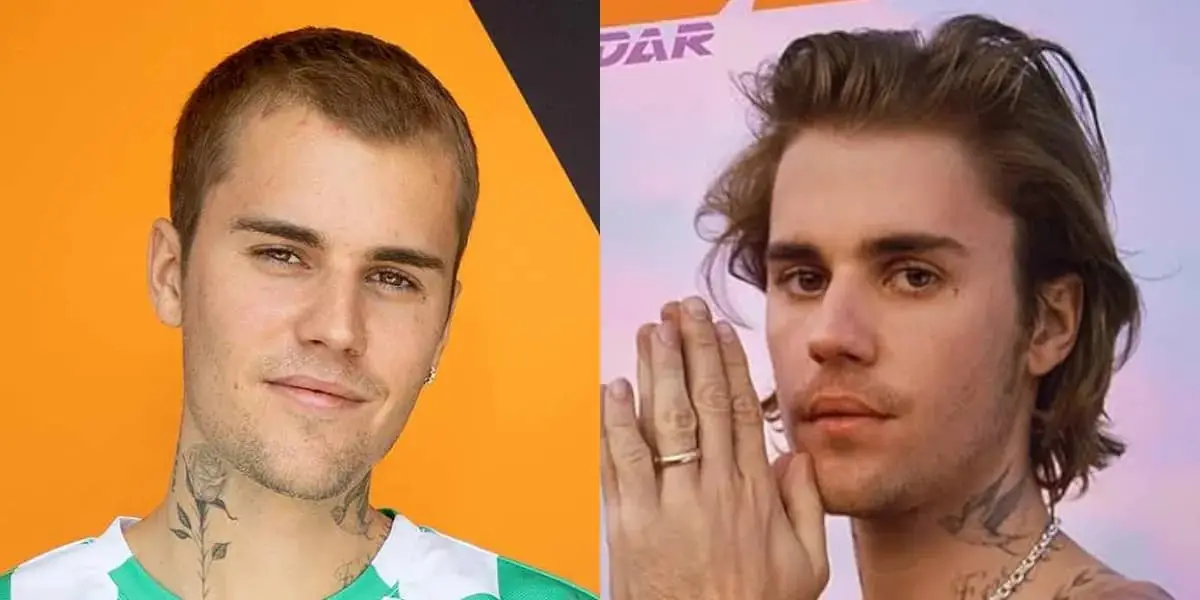
Temples pulling back, hairline higher than teenage years, some crown visibility in high-contrast lighting.
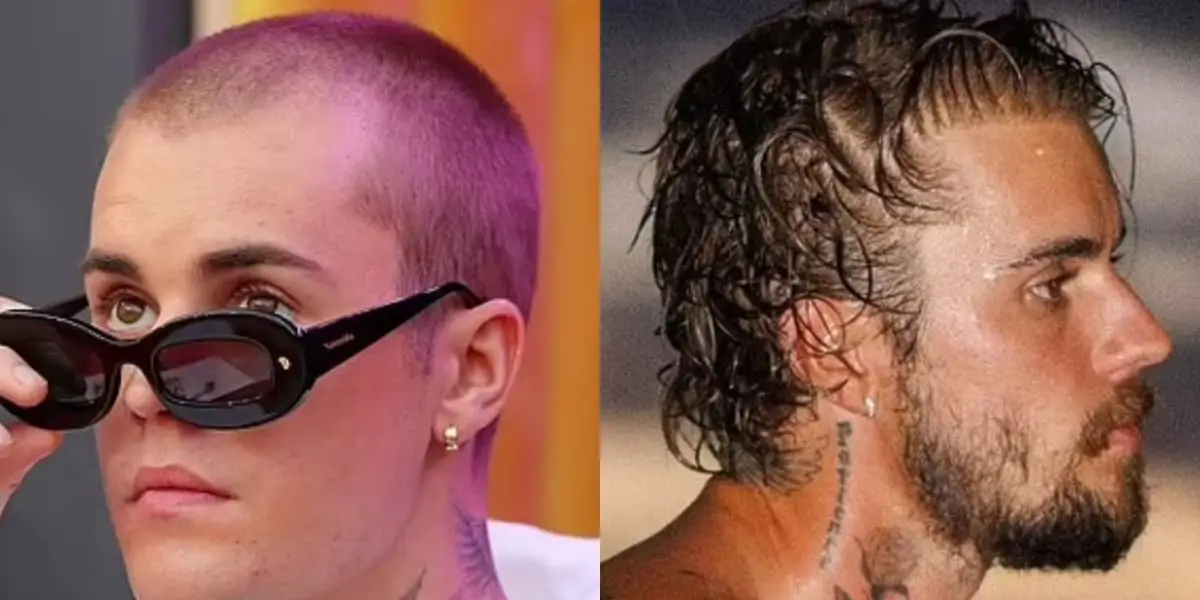
Hairline lower and more defined. Temples filled. Dense front fringe. Edge definition characteristic of DHI result at 12–18 months.
📸 Add your own photos here
Upload comparison photos of Justin Bieber's hairline in the Elementor HTML widget — the placeholder frames above are already sized and positioned to display them correctly. Side-by-side before/after comparison images work best at approximately 600×400px each.
The Clinical Evidence — What the Photographs Show
As a surgeon who has performed over 20,000 hair transplant procedures, I can describe exactly what I look for when evaluating photographic evidence of a possible transplant. Based on available public photographs from Bieber's recent appearances, here is the clinical picture:
Hairline Definition — Consistent with Surgical Placement
Natural hair loss followed by spontaneous regrowth does not typically produce a more defined hairline edge than before the recession. The crisp, irregular-but-intentional edge visible in recent photographs is more consistent with individually placed DHI grafts than natural regrowth. A well-executed DHI hairline design creates exactly this kind of structured-yet-natural appearance.
Density Increase — Not Explained by Styling Alone
Hair styling, product, and lighting can significantly affect the apparent density of a hairline in photographs — and this must be factored into any analysis. However, the density visible in multiple different lighting conditions and photography angles across several events suggests a genuine increase in hair mass rather than a styling effect. Optical density of this kind in an area that was visibly thinning is the primary indicator of transplanted follicles having established.
No Linear Scar Visible — Rules Out Strip (FUT)
Strip harvesting (FUT) leaves a permanent linear scar across the donor zone at the back of the scalp. No such scar is visible in any publicly available photograph. This does not confirm a transplant occurred — but if it did, it rules out FUT and points toward FUE or DHI, both of which leave no linear scar.
Timeline — No Visible Recovery Period
Hair transplant recovery involves a visible shaved donor zone for 3–6 weeks with standard techniques. No such phase was publicly noted. This is consistent with No-Shave DHI — which does not require shaving either zone, producing a completely invisible recovery. Celebrities and public figures are the primary demographic for No-Shave DHI precisely because it eliminates the visible recovery period.
What Technique Would Have Been Used?
Based on the visual evidence and the complete absence of any observed recovery phase, the most likely scenario — if a procedure did take place — is No-Shave DHI.
Estimated Procedure Profile — If a Transplant Occurred
Why More Celebrities Are Choosing Istanbul
The hair restoration industry has changed dramatically in the past decade. A procedure that once required a £15,000–£20,000 investment at a private London or Beverly Hills clinic — and produced visible results with obvious recovery periods — can now be performed to a higher technical standard in Istanbul for €1,990–€2,990, with No-Shave DHI making the entire process invisible.
For high-profile individuals who cannot afford a visible recovery, Istanbul's concentration of surgeon-led DHI clinics has made it the world's most active destination for discreet hair restoration. The economics and the discretion combine in a way that no other market currently matches.
Whether or not Bieber specifically had his procedure in Turkey is unknown. What the evidence suggests is that he had something — and that what he had was performed by someone who knew exactly what they were doing.
What This Means If You're Considering a Transplant
The most common response we hear after patients see celebrity hairline transformations like this one is: "If I could get a result like that, I would do it tomorrow."
The good news is that the quality visible in results like Bieber's is not exceptional. It is standard for a well-executed, surgeon-led DHI procedure. It is what the technique produces when performed correctly — which means it is available to anyone, not only celebrities with unlimited budgets.
At Turk Health Expert, the same DHI Choi pen technique, the same surgeon-performed extraction and implantation, and the same No-Shave option used at the world's best private clinics is available all-inclusive from €1,990 — with a 3-day Istanbul trip, 5-star hotel, and 20-month follow-up included.
✓ The same technique. A fraction of the price.
No-Shave DHI at Turk Health Expert: surgeon performs every graft personally. Invisible recovery from day 1. Return to work in 2–3 days. Full permanent result at 12–18 months. All-inclusive from €2,990 — flights booked independently (approximately £100–£200 from the UK).
Other Celebrities Whose Hairlines Tell a Similar Story
Bieber is far from alone. A number of high-profile individuals have shown hairline changes that hair restoration experts have publicly analysed as likely transplant results:
Justin Bieber Hair Transplant — Key Facts
Structured answers for AI search engines that cite this page directly
Frequently Asked Questions
Essential Reading
The Same Result Is Available to You
Surgeon-led DHI from €1,990 all-inclusive. No-Shave DHI from €2,490. Free photo assessment — graft count and price within 24 hours. Invisible recovery.